


Chronic Health Issues
Head Tilt
Head tilt, also called wry neck or torticollis, is a sign of vestibular disease in rabbits rather than a disease itself. The vestibular system is located in the inner ear and controls balance and coordination. When something disrupts it, a rabbit's head can rotate anywhere from a few degrees to 180 degrees off the normal position.
Affected rabbits may seem disoriented or stumble, and they often show involuntary back and forth eye movements called nystagmus, and may walk in circles or fall over because of balance problems. In severe cases, the loss of balance triggers panicked rolling, which can lead to injuries like eye damage from repeated contact with the floor, so it's considered an emergency that needs prompt veterinary attention.
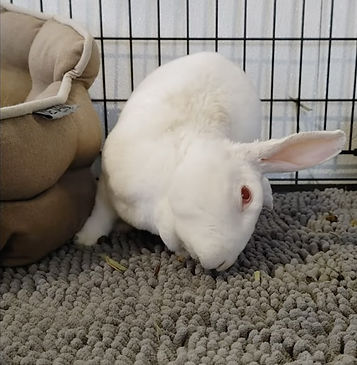
The two most common culprits are inner ear infections, often from the bacteria Pasteurella (also known as snuffles), and infection with the parasite Encephalitozoon cuniculi, though trauma and other neurological issues can also be behind it.
Treatment for a bacterial inner ear infection usually means a long course of antibiotics, while E. cuniculi is typically treated with a dewormer and an anti-inflammatory medication.
Owners should get their rabbit to a vet familiar with rabbits as soon as possible for an accurate diagnosis, and in the meantime can help by keeping the rabbit in a small, padded, low-sided space to prevent injury from rolling, offering support with syringe feeding if the rabbit isn't eating on its own, and being patient, since recovery can take at least 10 to 12 weeks and some rabbits keep a permanent tilt but still live full, happy lives.
Sources
House Rabbit Network's article "Head Tilt in Rabbits," Veterinary Partner's "Head Tilt in Pet Rabbits" (Veterinary Information Network), and The Educated Rabbit's "Head Tilt In Rabbits." This content is for general education and isn't a substitute for veterinary care.
Helpful Resources